Obviously, the BLM protestors believe that what ICE agents are doing is deeply wrong and unjust. Presumably, they are doing this with the intent that this will change something. Protesting the Sunday before Martin Luther King Jr. day seems like a smart move. And targeting a church who allegedly retains an elder who works for ICE makes sense, I guess.
But man, this is going to blow up massively in their face. If their intent was to actually move the needle on ICE deportations then they could not have done something more counter-productive. Any shift in the perspective of average Americans, who may have begun to feel uneasy about ICE, was lost in a few minutes.
What were they thinking?
If you watch the videos that the protestors have posted, they do themselves no favors. The congregants remain calm, no on gets into a shouting match with them, the pastor is firm but composed, and the only belligerent people in the room are those holding cell phones and haranguing families. As the protest goes on, the Black Lives Matter members portray themselves as both victims (“Hands up, don’t shoot”) and triumphant liberators, marching out of the emptied sanctuary with fists held high (“For freedom!”). But the reality is so patently obvious it is almost dizzying: they are the aggressors here. They are the ones scaring people. They have done nothing brave or courageous. Ask yourself: if your family were sitting in that church—in a day where you have heard story after story after story of shootings in churches—what would be going through your mind? Stop the video at 1:05 and see a father trying to comfort a terrified, crying child.
The man in the video above is particularly grating—he barks at people sitting in the church, making incoherent attacks (Your pastor wears a suit, you think Jesus wore a suit!…what?) and reaching for the most trite of criticisms (Look at all these white people sipping lattes—and (of course) he is white as well). No one finds shouting over people compelling, especially when what you are shouting sounds so vapid. It is off-putting to the extreme.
Of course, the supporters of ICE will find this infuriating. Of course, every evangelical will find this outrageous. But even conservatives who may have had reservations ICE will have found themselves instinctually circling the wagons, hardening against them. And no one—no one—who was on the fence will watch this and think, “Wow, I should join these people.”
Do you remember when the San Francisco Gay Men’s Choir sang “We’ll Convert Your Children”? This feels like that. You overplayed your hand and now to the vast swath of “normies” out there, you look like the bad guy. Marc Antony’s funeral speech comes to mind: “Men have lost their reason.”
So, why would they do it? Why saw your foot off if you are trying to run a race?
Of course, the answer is the Internet—algorithmic Internet. Technology is morally neutral. Smartphones didn’t force anyone to do this. This is the practical outworking of Far Left, hyper-woke ideology. But technology amplifies.1If you spend the majority of your time in a small conclave of other people who are Very Online and Very Political (the two are almost synonymous now), getting high off a particular strain of extreme views, battling fellow edgelords to be more outrageous and obnoxious and zealous, then you’ll think: Of course storming a church and shouting at people is a good idea. That’s good content!
In the real world, you will realize that real people don’t respond to this. Or rather, they do respond, but not in the way you think. You can LARP a civil rights leader and try your best to channel the moral high ground, but the hard, unavoidable facts are there glaring us in the face. I mean, you posted the evidence yourselves.
It would be one thing if the members of the church posted the BLM’s shameful behavior online to expose what really happened. If that were the case, at least the BLM would have the self-awareness to realize that this didn’t come across well. But when the protestors are filming it and posting it themselves? When they think that something so brazenly offensive and cringey and ugly is itself praiseworthy? Well…goodness. The only way you could do this and then brag about it is if you have spent so much time in a particular digital cocoon that you have—quite literally—lost touch with reality.
Were they ashamed when they committed abomination? No, they were not at all ashamed; they did not know how to blush. - Jer 6:15
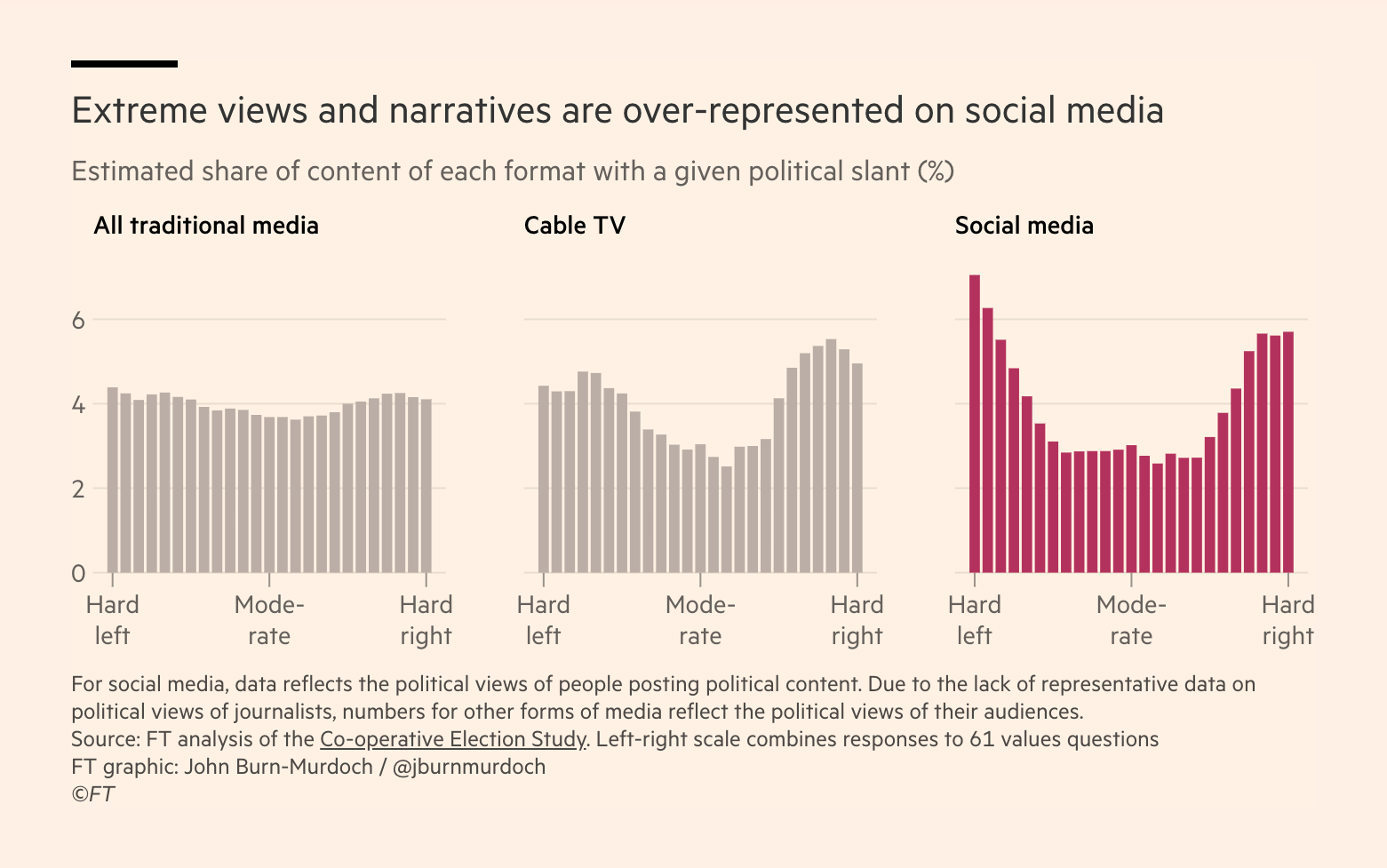
Communication technology, algorithms, and bottomless feeds amplify this dilemma. We get nearly all of our news from Tech Giants whose one prerogative is to harvest our attention for as long as possible and nothing keeps your attention like outrage. The palantir in your pocket is not incentivized to give you Truth, but to give you whatever will make you engage, share, comment, and scroll, scroll, scroll. Here, the coin of the realm is not veracity but virality. Which is why social media tends to favor the most extreme of political views.
So, what is a society to do if they get to a point where we no longer have faith in a shared Truth? Where we disagree about what is Good? Where our feet no longer stand on the same ground but reside in our digitally distorted prisons? What happens?
Resentment, polarization, and eventually violence.
Political violence is not only a fundamental rejection of belief in the power of free speech; it is a rejection of the very concept of that sacred canopy, of Truth itself. So it is a tragic and poetic irony that Charlie Kirk—a man who appears to have devoted his life to the concept of free speech, to Truth—was assassinated in the midst of a public debate. One reason his death feels so different is because Kirk wasn’t a politician. His power wasn’t in laws but in persuasion. It feels like the bullet tore through that idea as it tore through flesh: There is no truth, only power.
The protestors weren’t interested in persuading anyone with truth, they were there to demonstrate a raw display of power, a threat: if you or anyone around you is connected with ICE, we will find you and make your life miserable.
Afterall, that is what the Internet taught them to do.
What stands out to me is how the protestors encounter the congregation - not as an assortment of complex individuals - but as props in a political performance. Not mere background to the theatrics, mind you, but as a comprehensively guilty, shameful, hypocritical mass who are each complicit in the state actions the protestors ostensibly seek to upend. Their media amplified certainty regarding heroes and villains necessarily denying any opportunity for actual understanding (much less persuasion).
But does this not precisely enact the same deficit of curiosity and discernment they lament in immigration enforcement? That broad strokes portrayals of any group in stark moral terms inevitably fails to capture the quality of specific individuals and dehumanizes them in the process? Put more simply, it seems obviously nonsensical to fight fear and injustice with unjust fear.
These sort of intense contradictions highlight, for me, a fundamental lack of values - where the function of the actions are purely instrumental (and often superficially so) rather than guided by any consistent ethical pulse.




What stands out to me is how the protestors encounter the congregation - not as an assortment of complex individuals - but as props in a political performance. Not mere background to the theatrics, mind you, but as a comprehensively guilty, shameful, hypocritical mass who are each complicit in the state actions the protestors ostensibly seek to upend. Their media amplified certainty regarding heroes and villains necessarily denying any opportunity for actual understanding (much less persuasion).
But does this not precisely enact the same deficit of curiosity and discernment they lament in immigration enforcement? That broad strokes portrayals of any group in stark moral terms inevitably fails to capture the quality of specific individuals and dehumanizes them in the process? Put more simply, it seems obviously nonsensical to fight fear and injustice with unjust fear.
These sort of intense contradictions highlight, for me, a fundamental lack of values - where the function of the actions are purely instrumental (and often superficially so) rather than guided by any consistent ethical pulse.
Well said, Marc. I haven't found the right words yet for this whole charade, so thanks for sharing yours.